SEO & AI Search10 min readUpdated
SEO, AEO and GEO: How to Get Cited by AI Search in 2026
SEO ranks pages, AEO gets passages quoted, GEO gets brands recommended. How the three layers differ, what actually influences AI citations, and the implementation checklist we run on client sites.
BurTech Solution
Engineering team
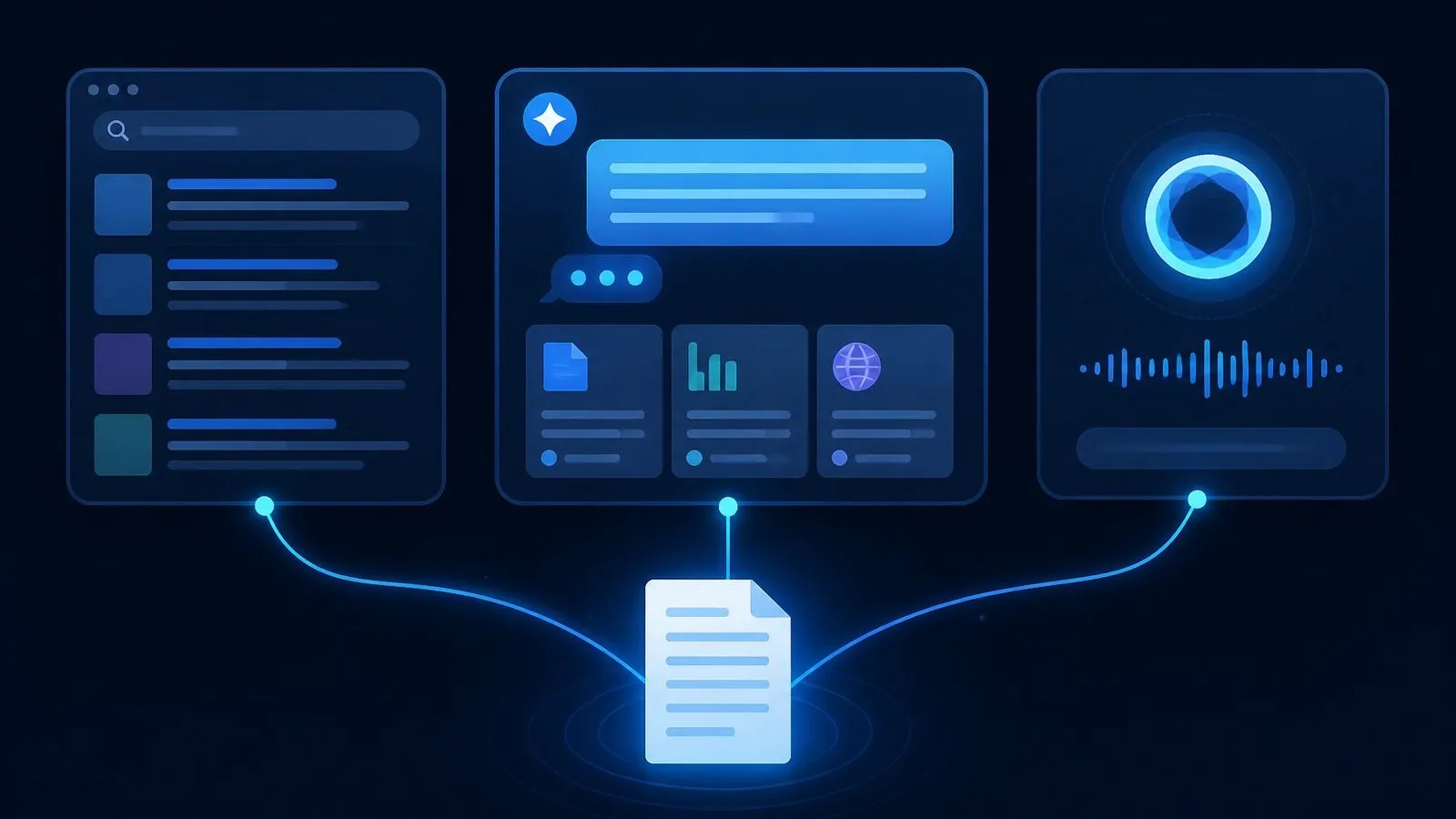
Traditional SEO gets you ranked in a list of blue links. Answer Engine Optimization (AEO) gets you quoted when ChatGPT, Perplexity or Google’s AI Overviews answer a question directly. Generative Engine Optimization (GEO) is the broader craft of making your brand the one AI systems mention, cite and recommend. Three names, one underlying reality: search now has multiple front doors, and most businesses have optimised for exactly one of them.
The good news is that you do not need three strategies. You need one content system built so that every surface — crawler, answer engine, generative model — can find, parse, trust and quote you. This guide covers how the three layers differ, what actually influences citations, and a concrete implementation checklist we run on client sites.
Three layers, one stack
| Layer | Where it shows up | What wins | Unit of competition |
|---|---|---|---|
| SEO | Google/Bing result pages | Relevance + authority + technical health | The page |
| AEO | AI Overviews, featured snippets, voice assistants | Direct, structured, liftable answers | The passage |
| GEO | ChatGPT, Perplexity, Copilot recommendations | Citability + brand mentions + entity clarity | The brand |
The order matters. A site that fails classic SEO — uncrawlable, slow, thin — has nothing for the higher layers to quote. A site that ranks but writes in vague marketing prose gets read and skipped by answer engines. And a brand nobody else mentions gives generative models no reason to recommend it over alternatives. Build bottom-up.
The foundation: classic SEO still decides who is eligible
Everything below assumes the basics are genuinely done, because AI surfaces inherit their candidate pool largely from conventional retrieval:
- Crawlable structure: clean URLs, an XML sitemap, internal links that describe their destination, no orphan pages.
- One page, one intent: each page answers a specific question or serves a specific job — pages that try to rank for everything rank for nothing and quote for nothing.
- Speed and stability: Core Web Vitals are a confirmed ranking signal, and slow pages get crawled less. (Our 30-minute speed checklist covers the fast fixes.)
- Titles and metas that state the answer’s topic plainly — clever headlines are for magazines.
AEO: writing answers machines can lift
Answer first, elaborate second
Answer engines extract passages. A section that opens with two or three sentences that fully answer the heading’s question — before any context or caveats — is a section that can be quoted verbatim. Write every H2/H3 as a question or a claim, then resolve it immediately. The pattern you are reading in this article (heading → direct answer → detail) is the pattern.
Structure is the signal
Lists for steps, tables for comparisons, short paragraphs with one idea each. Not because machines are stupid, but because structure disambiguates: a table row unambiguously maps a feature to a product; a numbered list unambiguously orders steps. Ambiguity is what kills extraction.
FAQ sections earn their keep twice
A genuine FAQ — real questions phrased how buyers ask them — serves human skimmers and gives answer engines pre-packaged Q&A pairs. Mark it up with FAQPage schema and the questions become machine-legible, too. Every service page on our own site carries one; so does this article, below.
Schema: say what you mean in JSON-LD
Structured data is how you remove guesswork: Article with author and dates, FAQPage for Q&A, Organization with your logo and profiles, Product with price and availability for stores, BreadcrumbList for hierarchy. None of it is exotic — it is JSON-LD in the page head, and it is the difference between a machine inferring what your page is and being told.
GEO: becoming the brand models mention
Let the crawlers in
Generative engines have their own user agents — GPTBot (OpenAI), ClaudeBot (Anthropic), PerplexityBot, Google-Extended. If your robots.txt blocks them (some security plugins and CDNs do by default), you are invisible to those systems no matter how good the content is. Decide deliberately; our stance is to allow them, because being quotable is the point.
llms.txt: the site summary for models
An emerging convention — a plain-text file at /llms.txt — gives language models a curated map of what your site offers: key pages, one-line descriptions, canonical facts. It costs twenty minutes and ensures the model’s first impression of your site is the one you wrote.
Entity consistency
Models connect facts probabilistically. If your business name, services, location and claims are phrased consistently across your site, Google Business Profile, LinkedIn and directories, the model’s confidence about who you are and what you do rises — and confident models make recommendations. Inconsistency (three names, conflicting service lists) reads as noise and gets averaged away.
Be citable somewhere that gets read
Perplexity and ChatGPT’s browsing mode cite sources. They disproportionately cite pages that answer a question cleanly and pages already referenced elsewhere — reviews, comparisons, community threads. Original, specific content (a real checklist, a real comparison with numbers, a documented process) earns those citations; generic “why X matters in 2026” listicles do not.
The implementation checklist
- Technical floor: sitemap, robots.txt reviewed for AI user agents, Core Web Vitals green, HTTPS, one H1 per page.
- Schema layer: Organization + WebSite sitewide; Article on posts; FAQPage where genuine FAQs exist; Product/Service where relevant. Validate with a rich-results test.
- Content rewrite pass: every key page opens with a liftable summary; H2/H3s phrased as questions; comparisons in tables; steps in lists.
- FAQ everywhere it is honest: service pages, product pages, long articles — mirrored in schema.
- llms.txt published and kept current as pages ship.
- Entity audit: identical business facts across site, GBP, socials, directories.
- Prove it with original material: real data, real processes, real case studies — the things other pages have a reason to link and models have a reason to quote. Our case studies exist partly for exactly this.
- Measure the new surfaces: watch referral traffic from perplexity.ai and chat.openai.com/chatgpt.com in analytics, and periodically ask the major assistants your money questions to see who they cite.
What changes for ecommerce specifically
Stores have an extra layer: product data. Assistants answering “what should I buy for X” lean on structured product information — attributes, availability, price, reviews — which most catalogues keep in fragments. That is a big enough topic that we wrote it up separately in Getting your product data ready for AI search; if you sell online, treat it as part two of this article.
How fast does any of this work?
Schema and structural changes can be re-crawled within days. Citation behaviour on generative platforms shifts more slowly and less predictably — models retrain and re-index on their own schedules — which is precisely why starting early matters: the brands being cited today wrote their liftable content before their competitors considered it. Treat AEO/GEO like SEO in 2005 — an unfair advantage available to whoever shows up first with clean fundamentals.
A worked example: turning a service page into a citable page
Abstract advice hides the work, so here is the transformation on a typical “AI automation services” page — the same surgery we performed on our own.
Before: the page opens with “We leverage cutting-edge AI to transform your business processes and unlock unprecedented efficiency.” No engine can quote that, because it asserts nothing checkable. The services are described in a paragraph of adjectives; pricing is “contact us”; there is no FAQ; the only heading is the company name.
After: the page opens with a liftable claim — “We design, build and maintain AI workflows that remove manual work: lead routing, content generation, CRM sync and reporting, wired into the tools you already use. Builds start at $1,500 and most ship in one to three weeks.” Every question a buyer asks became a heading with a direct answer beneath it: how long does a build take, do we need to switch tools, what happens when it fails. Pricing is stated. The FAQ is mirrored in FAQPage schema. A machine reading the page can now answer “how much does AI automation cost” and “how long does it take” with our sentences — attributed to us.
Notice what did not change: the design, the brand, the offer. Citability is mostly editing, not rebuilding.
Content types that earn citations
Generative engines cite disproportionately from a handful of formats. If you are choosing what to publish next, choose from this list:
- Honest comparisons. “X vs Y: which fits your business” pages get cited because assistants are constantly asked to compare. Ours on n8n vs Zapier exists for exactly this query class.
- Operational checklists. Concrete, numbered, do-this-then-that content is maximally liftable — each step is a quotable unit.
- Definitions and glossaries. “What is AEO” sections written in two clean sentences become the definition an engine reuses.
- Original numbers. Your own benchmarks, your own case results, your own pricing — data that exists nowhere else cannot be sourced from anyone else.
- Documented processes. “How we run a build, week by week” reads as experience — the E in E-E-A-T — and models weight demonstrated practice over generic advice.
The voice and local angle
Voice assistants answer with one result, not ten — the ultimate answer-first surface. The inputs are the same (passage-level answers, FAQ schema) plus one more: your Google Business Profile. Assistants answering “near me” and “who does X” questions lean heavily on GBP categories, services, hours and reviews. Keep it complete and identical to your site’s facts, and ask happy clients for reviews that mention the specific service — “built our Shopify store” in a review is entity evidence, not just a star.
Keeping it alive: the monthly half-hour
AEO/GEO is not a project you finish; it is a small standing habit:
- Ask ChatGPT, Perplexity and Google (AI mode) your five money questions. Note who gets cited and with what phrasing.
- Check analytics for AI-domain referrals and for rising branded search.
- When you ship a new page, give it the treatment on day one: liftable opening, question headings, schema, a line in llms.txt.
- Once a quarter, re-validate schema and re-crawl your own robots.txt — plugins and CDNs change defaults without asking.
Thirty minutes a month keeps you ahead of competitors who will eventually pay agencies to catch up to where you already are.
The entity audit, step by step
“Entity consistency” sounds abstract until you operationalise it. The audit takes an hour:
- Write your canonical fact sheet: exact business name, one-sentence description, services list, locations served, founding facts, key people, URLs. One page, one source of truth.
- List every surface that describes you: website pages, Google Business Profile, LinkedIn, Facebook, Instagram bio, directories, marketplace seller profiles, past press. Most businesses find ten to twenty.
- Diff each against the fact sheet. The classics: an old tagline on LinkedIn, a services list on GBP missing half of what you now do, an abandoned directory listing with a previous address, two spellings of the brand name.
- Fix in descending order of authority: your own site first, then GBP, then the majors, then the long tail. Where you cannot edit (old press), outweigh it with consistent current signals.
Repeat annually. Models refresh; your corrections propagate on their schedule, not yours — another argument for doing it before you need it.
Measuring AI visibility without fooling yourself
Because assistant answers vary by phrasing, session and model version, measurement here needs humility and a routine. What works in practice: a fixed panel of ten money questions, asked monthly in the same assistants, with citations logged in a spreadsheet — trend over quarters, not weeks. Alongside it: AI-domain referrals in analytics (assistant answers increasingly link their sources), branded search volume as the lagging indicator of being mentioned, and — for the diligent — server logs showing GPTBot and friends actually crawling the pages you want them to read. None of these is precise; together they are directionally honest, which is all a monthly half-hour needs to be.
Related reading: the ecommerce companion piece on product data for AI search, the 30-minute speed checklist that keeps your technical floor green, and our automation cost guide for the pipelines that keep content publishing consistently — the habit every layer of this strategy ultimately depends on.
The glossary, in thirty seconds
SEO (Search Engine Optimization): making pages rank in conventional search results. AEO (Answer Engine Optimization): structuring content so answer surfaces — AI Overviews, featured snippets, voice assistants — can extract and present it directly. GEO (Generative Engine Optimization): the practice of making a brand visible, cited and recommended inside generative AI systems like ChatGPT and Perplexity. E-E-A-T: Google’s shorthand for experience, expertise, authoritativeness and trust — the qualities your content must demonstrate rather than claim. llms.txt: a plain-text file offering language models a curated summary of your site. Five terms, one strategy: publish clean, structured, demonstrably expert content and let every engine — classic or generative — find its own way to reward it.
The bottom line
Search did not die; it grew new mouths. The playbook is one system: technically clean pages, passage-level answers, honest schema, open doors for AI crawlers, consistent entity facts, and original material worth quoting. Build it once and every surface — the blue links, the answer boxes, the chat recommendations — draws from the same well.
Frequently asked questions
Is AEO/GEO a replacement for SEO?
No — they are additional layers on the same foundation. Classic crawlability, speed and authority decide whether you are eligible; AEO structure decides whether you are quotable; GEO signals decide whether you are recommended. Skipping the foundation and buying an “AI SEO” package is buying a roof for a house with no walls.
Do FAQ sections still matter after Google reduced FAQ rich results?
Yes. The visual rich-result real estate shrank, but the structural value — pre-packaged, machine-legible Q&A that answer engines and models can lift — did not. Write FAQs for extraction and users, not for stars in a results page.
Should I block AI crawlers to protect my content?
It is a legitimate business decision, but understand the trade: blocking GPTBot and friends removes you from the answers your buyers increasingly read. For most service businesses and stores, being the cited source is worth far more than the content is worth as a secret.
How do I know if AI search is sending me customers?
Three signals: referrer traffic from AI domains in analytics, branded search volume rising without ad spend (people see the mention, then Google you), and simply asking the assistants your customers use — monthly — what they say about your category and whether you appear.
Is AEO different from SEO?
It builds on SEO but optimises for being quoted in AI answers, not just ranked in links.
How do I know if AI search cites me?
Track brand mentions in ChatGPT, Perplexity and Google AI Overviews for your core topics.
Written by
BurTech Solution
Engineering team
The BurTech Solution engineering team designs, builds and maintains AI automation, ecommerce stores, SaaS and custom software for growing businesses. Everything on this blog comes from work we ship for clients and run ourselves.
Keep reading
More on seo & ai search.
SEO & AI Search10 min read
FAQ Schema in 2026: Still Worth It?
The rich-result dropdowns are history, but FAQ schema quietly became more valuable, not less: structured Q&A is what answer engines parse when choosing whom to quote. The honest 2026 assessment — what it does now, which pages deserve it, and how to…
Read the article →
SEO & AI Search9 min read
Content Refresh: When to Update, Merge or Delete Old Posts
Your archive is quietly split into winners, fixables and dead weight. The four-way decision framework — update, merge, delete or leave alone — with the criteria, the redirect mechanics, and why AI search makes refresh discipline pay twice.
Read the article →
SEO & AI Search10 min read
Local SEO for Service Businesses: The Google Business Profile Playbook
The map pack runs on relevance, distance and prominence — and the Google Business Profile is the lever. The fields that matter, the review system that compounds, local content, and the honest limits.
Read the article →