Ecommerce11 min read
Abandoned Cart Emails: A Recovery Sequence That Works Without Discounts
A three-touch cart recovery sequence that removes the reasons people left instead of bribing them back — timing, copy patterns, the segmentation that decides who ever sees a discount, and honest measurement.
BurTech Solution
Engineering team
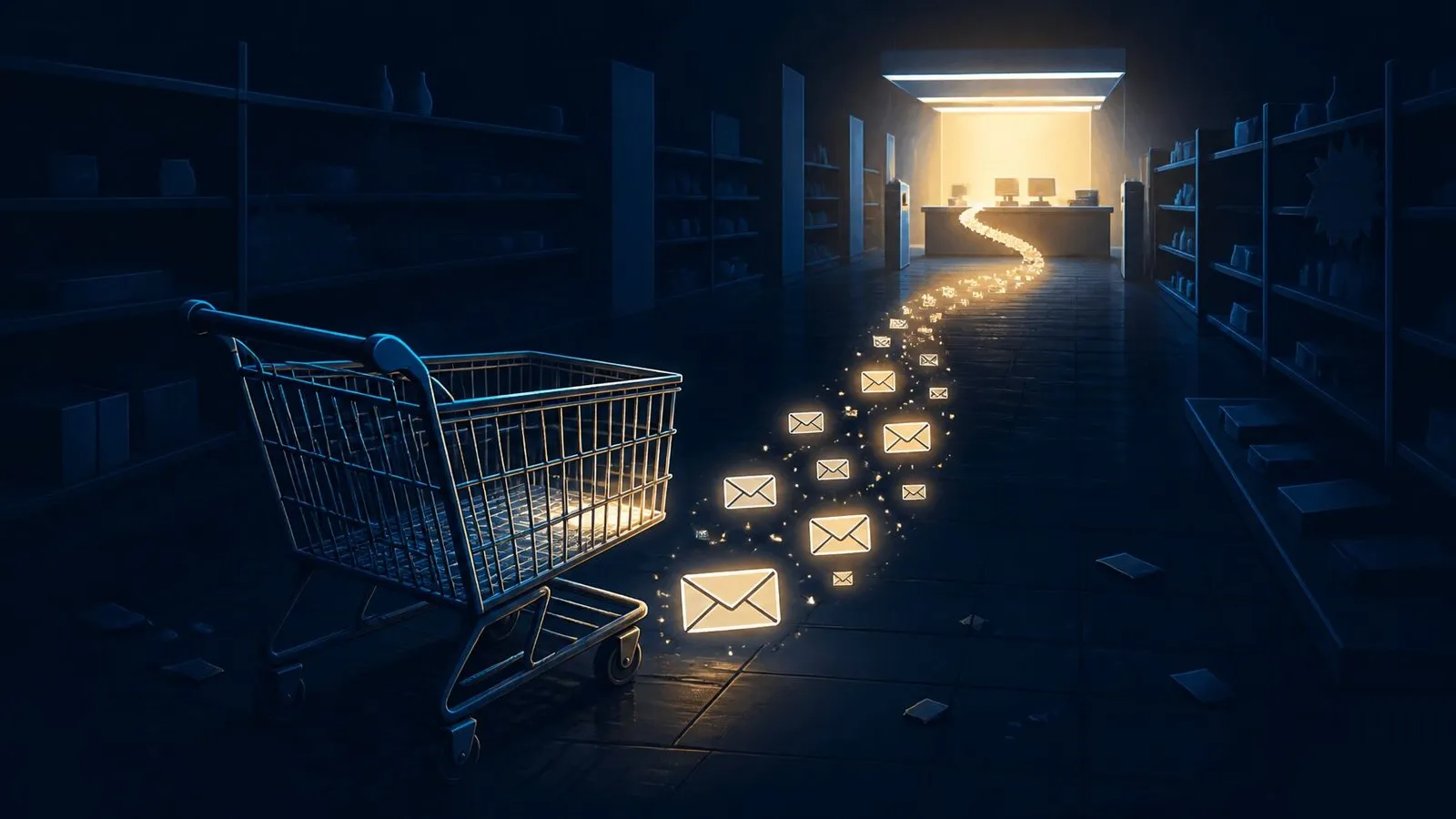
Most abandoned cart emails train customers to abandon carts. The formula — wait an hour, send “you forgot something!”, follow with 10% off — recovers some sales this month and quietly teaches every repeat visitor that leaving equals a coupon. There is a better sequence: one that recovers sales by removing the reasons people actually left, holds margin by default, and keeps discounting as a targeted last resort instead of a reflex.
This is that sequence — timing, message by message, with the reasoning, the copy patterns, the segmentation rules that decide who ever sees an incentive, and the measurement that tells you it is working. It assumes any mainstream email platform; everything here is configuration and copy, not custom code.
Why carts are abandoned (and why it mostly isn’t rejection)
Industry research has said the same thing for a decade, and store session recordings confirm it nightly: the biggest killers are unexpected costs at checkout (shipping above all), forced account creation, complicated checkout, payment doubts, and — the honest giant — “just browsing / comparing / got interrupted.” Note what that list is not: it is not “the price was too high,” which is the only problem a discount solves. Your sequence’s job is triage: bring back the distracted, reassure the doubtful, and fix what the surprised encountered — the same de-frictioning your checkout itself should be doing upstream.
The window logic in one paragraph, since timing questions dominate this topic: one hour catches intent while it is warm without feeling surveilled (the fifteen-minute email reads as creepy precisely because it is accurate); twenty-four hours is when genuine doubts have crystallised into words; three days is decision o’clock — after that, response curves flatten toward zero and further emails spend goodwill you will want later. Shift the windows to your buying cycle (considered purchases stretch them; impulse categories compress them), but keep the shape: warm → doubt → decision.
Message one — the helpful receipt (about 1 hour after)
Job: serve the distracted majority while intent is warm. Not selling — remembering.
Contents: the cart, visually — product images, variants, prices; one prominent button returning to a preserved cart (test this on mobile, where most of these emails are opened); shipping cost and delivery window stated plainly (if a surprise killed the checkout, this is where honesty starts the repair); and one quiet line of service: “Questions? Reply to this email — a human reads these.”
Copy pattern: subject lines that name the product beat generic nostalgia — “Your [product name] is still in your cart” outperforms “You left something behind!” in nearly every test because it re-triggers the specific desire. Tone: concierge, not carnival. No countdowns, no “hurry”, no discount — you would be paying people who only needed the reminder.
Message two — the objection handler (about 24 hours)
Job: the doubters. A day later, whoever is still away has a reason; this email answers the top three for your category, directly.
Contents: cart summary compressed to a strip; then the objection block — returns policy in one honest sentence, sizing or compatibility reassurance with a link to the guide or calculator, delivery and payment-security notes; then — the highest-performing single element in this whole sequence for considered products — one specific review of the exact product in the cart, with a name and a concrete detail. Social proof at the moment of doubt is worth more than 10% off almost everywhere we have measured it.
Copy pattern: subject as a question that names the doubt — “Still deciding on the [product]?” — with a body that reads like a knowledgeable friend answering, not a pitch escalating. If your store has a fit tool or comparison page (the kind we built for Buracare), this is its moment.
Message three — the closer (about 3 days)
Job: resolution. Whoever remains is comparison shopping, budgeting, or gone; this email gives them a clean reason to decide now — without training the next cart.
Contents by segment (this is where the discount decision finally lives — see the segmentation rules below): for incentive-eligible visitors, one modest offer with a real expiry, framed as service (“your cart’s price is held until Friday” beats “10% OFF!!” — same math, different lesson taught); for everyone else, genuine urgency only where it exists (“two left in your size” — verified from live inventory, never faked), or a value restatement: the guarantee, the delivery promise, the strongest review. For low-ticket items, message three is often better skipped entirely — the margin math of chasing a $19 cart with a third email rarely closes.
Copy pattern: shortest email of the three. One idea, one button, and a graceful exit: “We’ll leave your cart saved — no more emails about this one.” That sentence costs nothing, reads as respect, measurably reduces unsubscribes, and makes the next abandonment recoverable too.
The discount decision: segmentation, not sequence
The rule that protects margin: incentives are targeted by who is abandoning, not scheduled by when.
| Segment | Incentive? | Reasoning |
|---|---|---|
| First-time visitor, high-value cart | Modest offer in message 3 | Acquisition economics — one-time cost against first-order LTV |
| Repeat customer | No — service and stock honesty only | They buy anyway; a coupon here is pure margin donation and trains waiting |
| Repeat abandoner (serial coupon-fisher) | Never; suppress from offers | The pattern exists because a past sequence taught it — stop teaching it |
| Low-ticket cart | No; two-touch sequence only | Incentive + email costs exceed contribution |
| Sale-price cart | No — price already answered | Doubt or distraction is the issue; address those |
Every mainstream platform can express these rules with basic conditions (order count, cart value, discount-usage history). The half hour of setup is the difference between a recovery program and a standing 10%-off-everything policy with extra steps.
Plumbing that makes or breaks it
- Capture timing: email capture happens at checkout start (or via site account/newsletter identity) — the sequence can only chase carts it can address. This is a strong argument for express-payment buttons high in checkout: wallet users identify early.
- Suppression rules, tested: purchase anywhere (including in-store or via another device) halts the sequence instantly; support ticket about the order halts it; a second abandonment inside the window does not double-enroll. Nothing burns trust like “come back!” after they came back.
- The preserved cart link: deep-links must restore the cart on mobile, logged out, weeks later. Test quarterly — platform updates quietly break this and the whole sequence with it.
- Reply-to a human: the “reply to this email” line only works if replies route to support and get answered. Some of the highest-value saves arrive as replies — a sizing question answered within the hour converts at rates no automation touches. (Where volume demands it, this is a natural human-in-the-loop triage lane.)
- SMS, if you use it, gets one touch: the hour-one reminder for opted-in customers, service-toned. Mirroring all three emails to SMS is how brands get muted.
The copy vault: subject lines and openers that carry the sequence
Because most sequence performance lives in a dozen sentences, here is a working set to adapt — grouped by message and by what they signal:
Message one (service tone): “Your [product] is still in your cart” · “Saved your cart — here it is” · “Left mid-checkout? Everything’s where you left it.” Openers: “No rush — your cart is saved. Here’s a one-tap way back, plus the shipping details up front this time.” The pattern: possession + reassurance, zero pressure.
Message two (doubt tone): “Still deciding on the [product]?” · “The question most people ask about the [product]” · “Will it fit? Here’s how to know.” Openers: “Buying [category] online has one hard part — here’s how we make it safe.” The pattern: name the doubt before answering it; readers feel read, not chased.
Message three (resolution tone): “We’ll hold your price until Friday” · “Two left in your size — thought you’d want to know” · “Last note about your cart (promise).” Openers: one sentence of respect — “Either way, thanks for considering us; here’s where things stand.” The pattern: finality without pressure; scarcity only when true.
House rules across all twelve: never fake urgency, never use guilt (“you forgot…” reads as blame), keep subject lines under ~45 characters for mobile truncation, and retire any line the moment its numbers sag — copy fatigues like ad creative, on roughly quarterly cycles.
Measuring it honestly
Cart recovery is where vanity metrics go to thrive, so pick numbers that survive scrutiny:
- Recovered revenue per recipient — total purchase value from sequence recipients within a sensible window, divided by recipients. This is the headline; it rewards sequences that convert without spamming volume.
- Margin after incentives — recovered revenue minus discounts granted. The number that exposes coupon-reflex programs: many “20% recovery rates” are negative-margin theatre once the incentive cost is subtracted.
- Sequence attribution honesty — some abandoners return unprompted; a permanent small holdout group (5–10% receiving no sequence) tells you the true lift instead of crediting the emails with every organic return. One evening of setup, permanent calibration.
- Per-message diagnostics — open and click rates locate weak links (a dead message two means your objections block misses the real objections; ask support what people actually ask). Unsubscribe rate above ~0.5% per message means frequency or tone is off.
- The training signal — percentage of repeat customers whose orders now begin with an abandoned cart plus a coupon. If it climbs, your past sequence taught the behaviour and the segmentation rules above are the cure.
Fix the leak before renting the bucket
One uncomfortable truth belongs in every cart-recovery article: the sequence is compensation for whatever made people leave, and the highest-ROI move is often upstream. Before tuning message two’s objection block, ask why the objection survives to email at all — if shipping surprise drives your abandonment, showing costs on the product page recovers more revenue than any email ever will; if sizing doubt does, the fit tool belongs on the page, not in the follow-up. Run the sequence and the fixes in parallel: the emails as the safety net this quarter, the checkout de-frictioning as the structural cure. The healthiest stores we manage have unimpressive recovery rates for the best reason — fewer recoverable carts, because fewer people hit a reason to leave.
The diagnostic that connects them: message two’s click patterns are a free survey. If the returns-policy link dominates, your policy is invisible on-site; if the size guide dominates, fit content needs promotion; if replies dominate, your product pages are under-answering questions your support team could dictate in an afternoon. The sequence, read this way, is not just a revenue channel — it is instrumentation on your checkout’s failures, reporting weekly, for free.
The adjacent flows that share the plumbing
Browse abandonment — viewed a product repeatedly, never carted: one gentle email, engaged subscribers only, more editorial than urgent (“still thinking about the X? here’s what owners say”). It monetises interest without presuming intent, and one touch is the whole flow.
Checkout abandonment vs cart abandonment — someone who entered payment details and stopped met a specific obstacle; the hour-one email for this segment should ask what went wrong (“did something break? reply and a human will fix it”) — it converts problems into saves and surfaces checkout bugs you did not know you had.
Post-purchase flows — the sequel that makes recovery matter: delivery expectations, usage guidance, then the review ask. A buyer recovered once and served well becomes the repeat customer your segmentation later protects from unnecessary coupons — the flows form one system, which is why we wire them together in every Shopify engagement.
The launch checklist for the whole sequence
- Map your segments in the email platform: first-time vs repeat, cart value bands, discount-history flag. Ten conditions, thirty minutes.
- Write the three messages from the patterns above, with your category’s top three objections (ask support for them — do not guess) in message two.
- Wire the suppressions — purchase halts, ticket halts, no double-enrollment — and test each with a real order before launch day.
- Test the cart link on a phone, logged out, from a different network. Then calendar the quarterly retest.
- Set the holdout (5–10%) and build the four-number dashboard: revenue per recipient, margin after incentives, per-message diagnostics, the training signal.
- Launch to a slice first — 20% of abandoners for two weeks — then full volume once deliverability and numbers look sane.
- Review monthly, rewrite quarterly: copy fatigues, objections shift with seasons and products, and message two’s click patterns keep telling you what to fix upstream.
Total build time for a competent operator: an afternoon plus testing. Against what an unbuilt sequence quietly forfeits every week — and what a coupon-reflex one donates — few afternoons in ecommerce pay better.
A worked timeline: one cart, three days
Tuesday 14:10 — Dana adds a $140 jacket, reaches shipping, sees the cost, leaves. 15:10 — message one: cart, jacket photo, shipping stated plainly ($8, 2–4 days), reply-to line. Dana is in a meeting; opens on the bus, doesn’t act. Wednesday 14:00 — message two: “Still deciding on the Fieldstone jacket?” Returns policy in a sentence, the size-guide link, and a review: “runs true to size, survived a Halifax winter — Marta.” Dana clicks the size guide, still hesitates. Friday 14:00 — Dana is a first-time visitor with a high-value cart: message three holds the price until Sunday, states it as service. Saturday morning: purchase, no discount code involved — the price-hold framing converted without teaching couponing, the review did the persuasion, and the sequence’s only cost was three well-mannered emails.
The deliverability floor
None of this matters from the spam folder, and recovery flows are deliverability-sensitive: they are triggered, personalised, commercial email — exactly the profile filters scrutinise. The floor: authenticated sending (SPF, DKIM and DMARC configured for your sending domain — mailbox providers now effectively require them for bulk senders), a warmed dedicated or reputable shared sending domain, list hygiene that never emails addresses that hard-bounced, and honest engagement — the same segmentation that protects margin also protects reputation, because emails people open teach filters your mail is wanted. Check inbox placement quarterly with seed tests; a sequence silently landing in spam looks, in your dashboard, exactly like copy that stopped working — diagnose the folder before rewriting the subject lines.
The bottom line
Abandoned carts are not lost sales — they are unanswered questions. Answer them in order: remind the distracted within the hour, reassure the doubtful within the day, resolve the undecided within the week, and let segmentation — not habit — decide who ever sees a discount. The sequence that respects the reader recovers more this quarter and keeps recovering next year, because it never taught anyone that leaving pays.
Frequently asked questions
How many emails is too many?
Three touches over roughly three to five days is the defensible ceiling for one cart; past that, incremental saves are outweighed by list fatigue and unsubscribes. Two is correct for low-ticket carts; one for browse abandonment. When in doubt, count like the recipient, not the dashboard.
Plain text or designed emails?
Message one and three work in either; message two benefits from product imagery and the review card. What matters more than aesthetics: mobile rendering, a button that survives dark mode, and load-light images so the cart is visible before the scroll. Test in real inboxes, not previews.
Do we need consent to send these?
Cart emails ride on the customer relationship in most regimes, but rules differ (CASL in Canada is stricter than CAN-SPAM; GDPR expects a lawful basis and easy opt-out). Practical floor everywhere: honour unsubscribes instantly across the whole flow set, and never buy your way around consent with imported lists. Compliance details belong with your counsel; the design above works within any of these regimes.
Is SMS worth adding?
For opted-in customers and one service-toned touch, yes — open rates make the hour-one reminder land. As a channel for messages two and three, rarely: urgency pressure by text reads as pushy exactly where email reads as helpful. SMS is a scalpel here, not a second sequence.
What about cart recovery for B2B or quote-based selling?
The architecture transfers with the vocabulary changed: the “cart” is an unfinished quote request or configurator session, message one is the helpful summary with a resume link, message two answers procurement's classic doubts (lead times, volume pricing, references), and message three offers a human — “want fifteen minutes with an engineer?” — rather than a discount. Longer windows (days, not hours) respect longer buying cycles. The principle is identical: address the reason the process stalled, in the order reasons occur.
How many abandoned cart emails should I send?
Three over roughly three to five days for a standard cart — a reminder at one hour, an objection-handler at 24 hours, a closer at three days. Two for low-ticket carts; more than three trades goodwill for diminishing saves.
Should abandoned cart emails include a discount?
Only by segment, never by default: a modest offer for first-time high-value carts can make acquisition math work, while discounting repeat customers donates margin and trains coupon-waiting.
When should the first cart recovery email be sent?
About one hour after abandonment — soon enough that intent is warm, late enough not to feel surveilled. The first email should be a helpful receipt with the cart and shipping facts, not a sales pitch.
Written by
BurTech Solution
Engineering team
The BurTech Solution engineering team designs, builds and maintains AI automation, ecommerce stores, SaaS and custom software for growing businesses. Everything on this blog comes from work we ship for clients and run ourselves.
Keep reading
More on ecommerce.
Ecommerce10 min read
Product Photography vs Listing Images: What Amazon Rewards
Photography makes a product look true; listing images make it easy to choose. What Amazon actually rewards — the image stack, slot by slot, with the photography baseline, thumbnail-first design rules, compliance lines and how to test with data.
Read the article →
Ecommerce9 min read
Post-Purchase Flows: The Cheapest Revenue in Ecommerce
The customer who just paid you is the cheapest revenue you will ever touch. The full post-purchase machine, flow by flow — confirmations, delivery check-ins, review requests, replenishment and winback — with timing, wiring and measurement.
Read the article →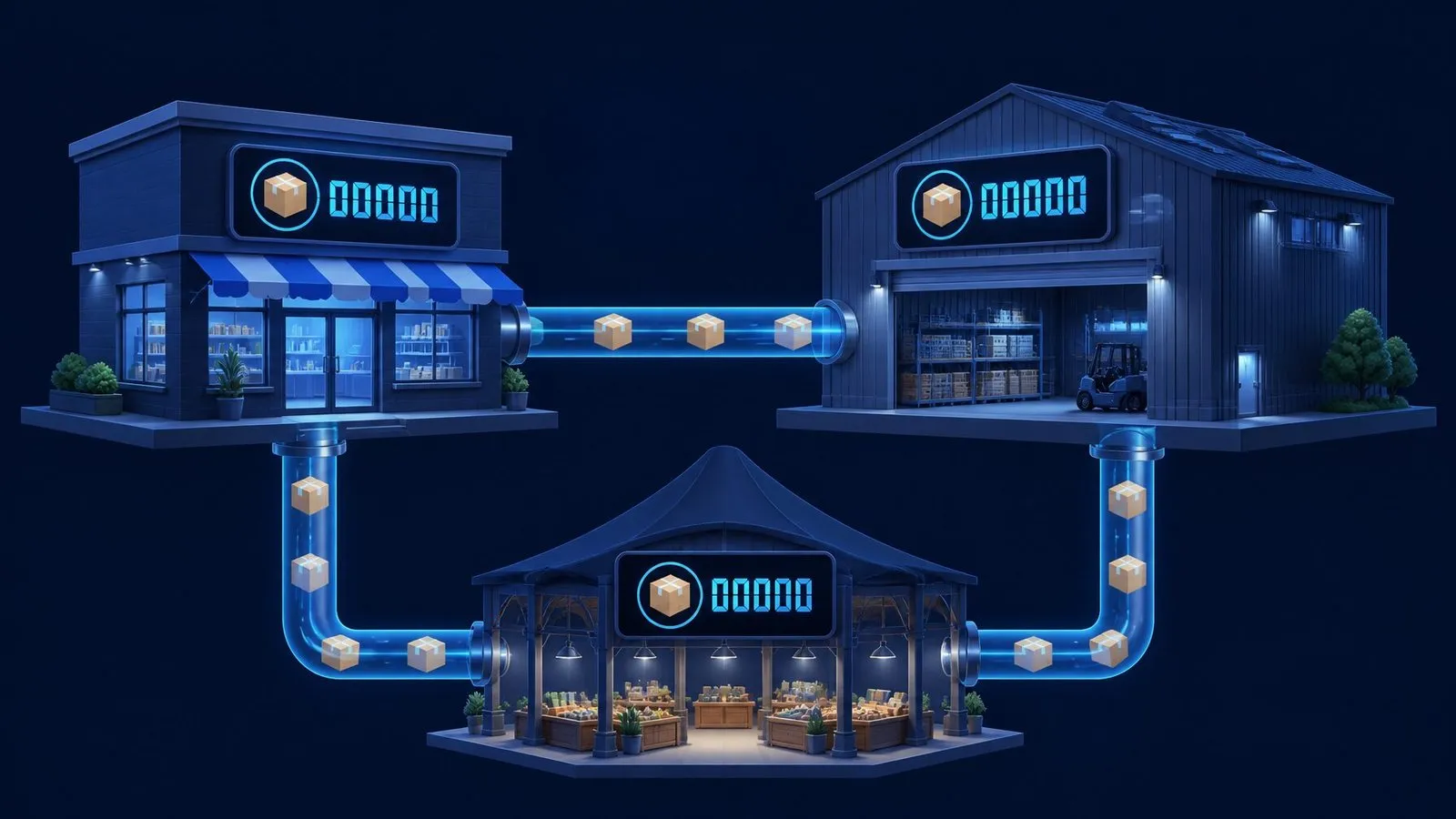
Ecommerce8 min read
Inventory Sync: Keeping Store, 3PL and Marketplace In Agreement
Oversells happen when three systems each believe they own the stock number. The one-owner architecture, webhook + reconciliation sync patterns, buffer math against overselling, and the habits that survive Black Friday.
Read the article →